
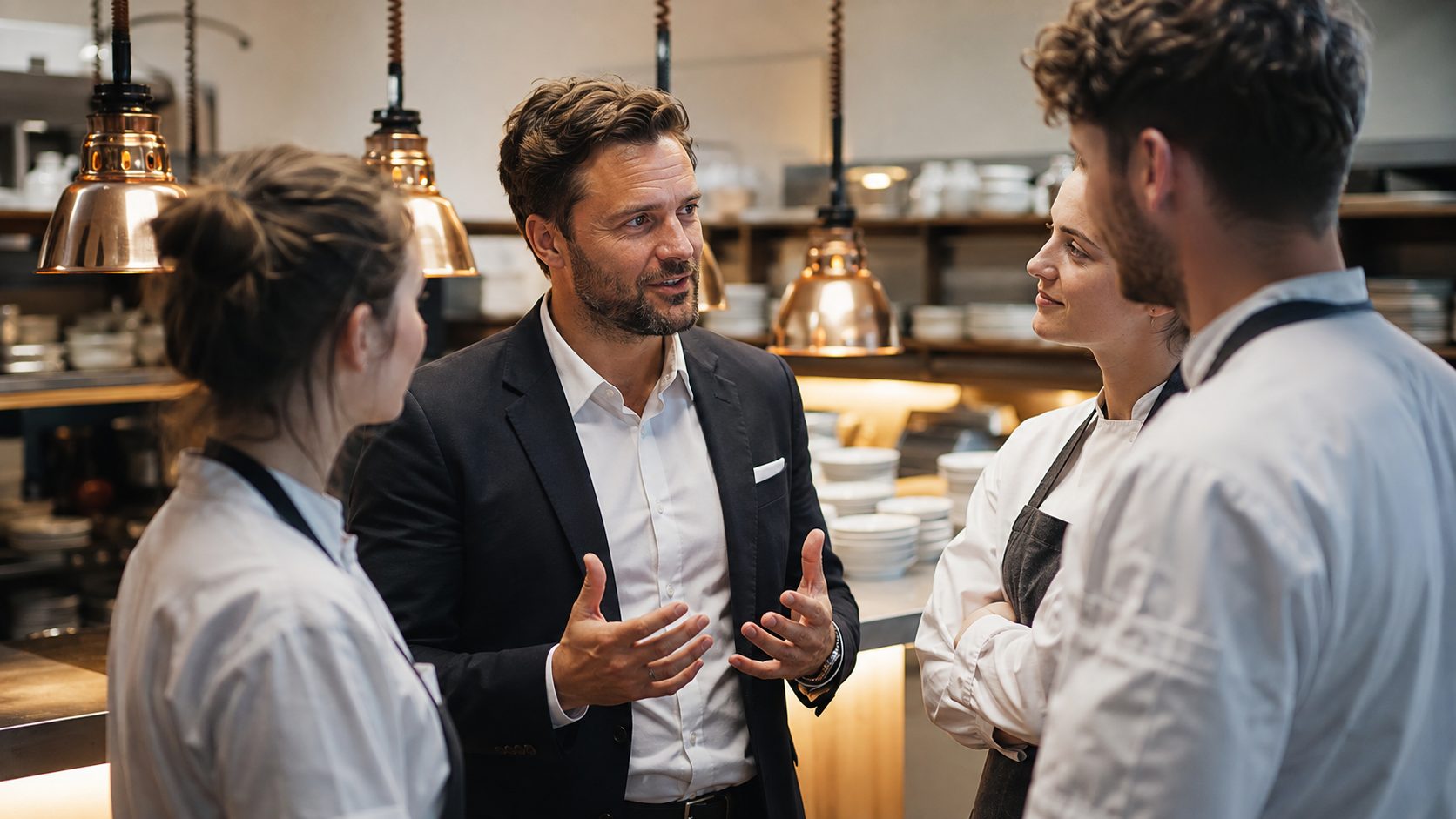
Walk into any hospitality business on a Friday night and you can tell within five minutes whether it's well led. Not from the covers, not from the till, but from how the team moves. Do they check on each other without being asked? Does the manager on the floor look like they're firefighting or leading? Is there a plan, or is everyone just reacting to whatever comes through the door?
Good hospitality leadership isn't charisma. It's not the loudest person in the pass or the manager who can pull the longest shift without complaining. It's a set of specific, learnable habits that show up in how a team performs when things get hard — because in this industry, things get hard most days.
Leadership is a shift skill, not a title
The biggest misconception in hospitality is that leadership arrives with the job title. Someone gets promoted to shift leader, supervisor or manager because they were a brilliant server, chef or bartender, and then they're expected to lead a team with no real preparation for what that means. The skills that made them excellent at the job — speed, technical ability, calm under pressure — are not the same skills that make someone good at developing other people.
This is why so much hospitality leadership training focuses on the wrong things. It teaches rotas, compliance and process, all of which matter, but skips the harder part: how to actually lead a shift full of people with different motivations, different experience levels and different bad days.
A good hospitality leader treats every shift as a leadership opportunity, not just an operational one. They're not only asking "did we hit the numbers" — they're asking "did my team feel backed, did the new starter get looked after, did I catch a problem before a guest did."
The habits that separate good leaders from the rest
They set the tone before service starts, not during it. A pre-shift briefing that's rushed or skipped tells the team leadership is optional today. A good leader uses those five or ten minutes to set expectations, flag what's different about today, and give people a reason to care about the shift ahead — not just a list of specials.
They notice, and they say something. Recognition in hospitality is often left to chance — a nod here, a "cheers" there. Leaders who build strong teams make noticing deliberate. They catch someone handling a difficult table well, or a kitchen porter keeping the pass clear under pressure, and they say it out loud, in the moment, not in a review three months later.
They give feedback in real time, not just in appraisals. Waiting for a scheduled review to raise something that happened weeks ago helps no one. Good leaders correct and coach in the moment — quietly, without humiliating anyone in front of guests or colleagues — and they do it as often for good performance as for mistakes. See our feedback frameworks for managers for specific methods that make this repeatable across a whole team.
They protect their team from chaos rather than passing it downward. When head office changes a policy last minute, when a booking system fails, when a supplier lets them down, a good leader absorbs some of that pressure rather than letting it land on the newest member of staff. The team should feel the plan is under control even when the leader knows it isn't.
They develop people on purpose. This is the one most operators skip under time pressure. A good leader has a rough sense of where each person on their team wants to go — even if it's just "I want to be more confident on the floor" — and looks for chances to stretch them toward it. Left unmanaged, hospitality careers often stall not because people lack potential, but because nobody ever deliberately built them up.
They stay visible on the floor. Leadership from the office, or from behind a laptop doing rotas during service, doesn't build trust. The leaders teams respect most are the ones who are still willing to run food, cover a break, or step behind the bar when it's slammed — not because they have to, but because it shows the standard they expect of everyone else.
Why this matters more than most training budgets suggest
Hospitality has one of the highest staff turnover rates of any UK sector, and the evidence from operators we work with points consistently to the same root cause: people don't leave jobs, they leave managers — see why hospitality staff really quit for the specific patterns behind that. A team led well will tolerate long hours, physical work and imperfect conditions far longer than a team led badly will tolerate an easy job with a poor leader.
That's the case for investing in leadership development specifically, rather than only technical or compliance training. Technical skills keep the operation running. Leadership skills keep the team together long enough for that operation to matter.
Building leaders, not just managers
The gap between a good employee and a good leader is rarely closed by accident. It takes structured development — real practice giving feedback, real coaching on how to run a briefing, real reflection on what happened after a difficult shift — not just a manual handed over on day one. That is what our hospitality leadership workshops are built to do in a day.
At WHY Hospitality, this is the work we do with operators who are ready to stop hoping their best people become good leaders and start building that outcome deliberately. Whether that's through our consulting work with your existing management team or a structured programme through HATS, the goal is the same: leaders who make every shift better because they were on it, not just present for it.
If your business is growing faster than your leadership bench, that's usually the moment worth addressing it — before it becomes a retention problem instead of a training one.