

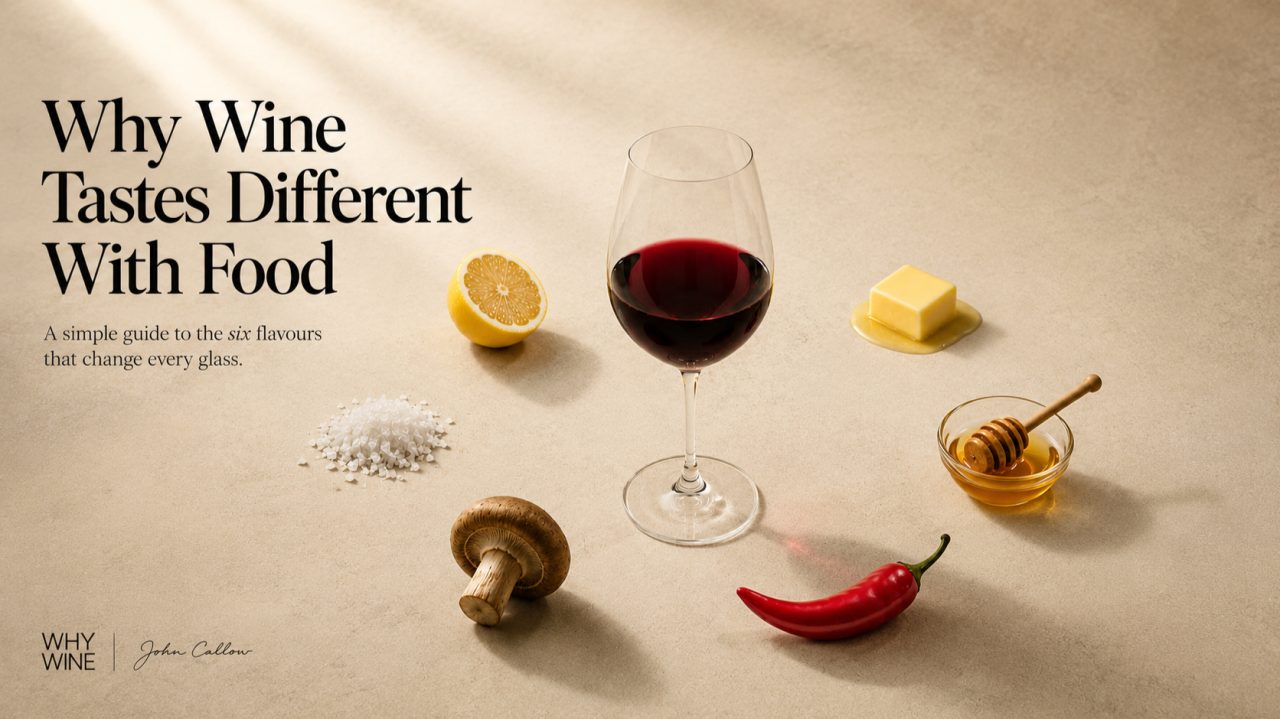
A simple guide to the six flavours that change every glass.
One of the questions I’m asked most often, whether I’m teaching a WSET course, hosting a tasting, or just chatting over a glass of wine, is:
“How do I know which wine goes with which food?”
It’s a fair question. There are shelves full of books, endless online guides, and plenty of strong opinions on the subject. It’s no wonder people assume food and wine pairing is complicated.
But here’s the truth. It doesn’t have to be.
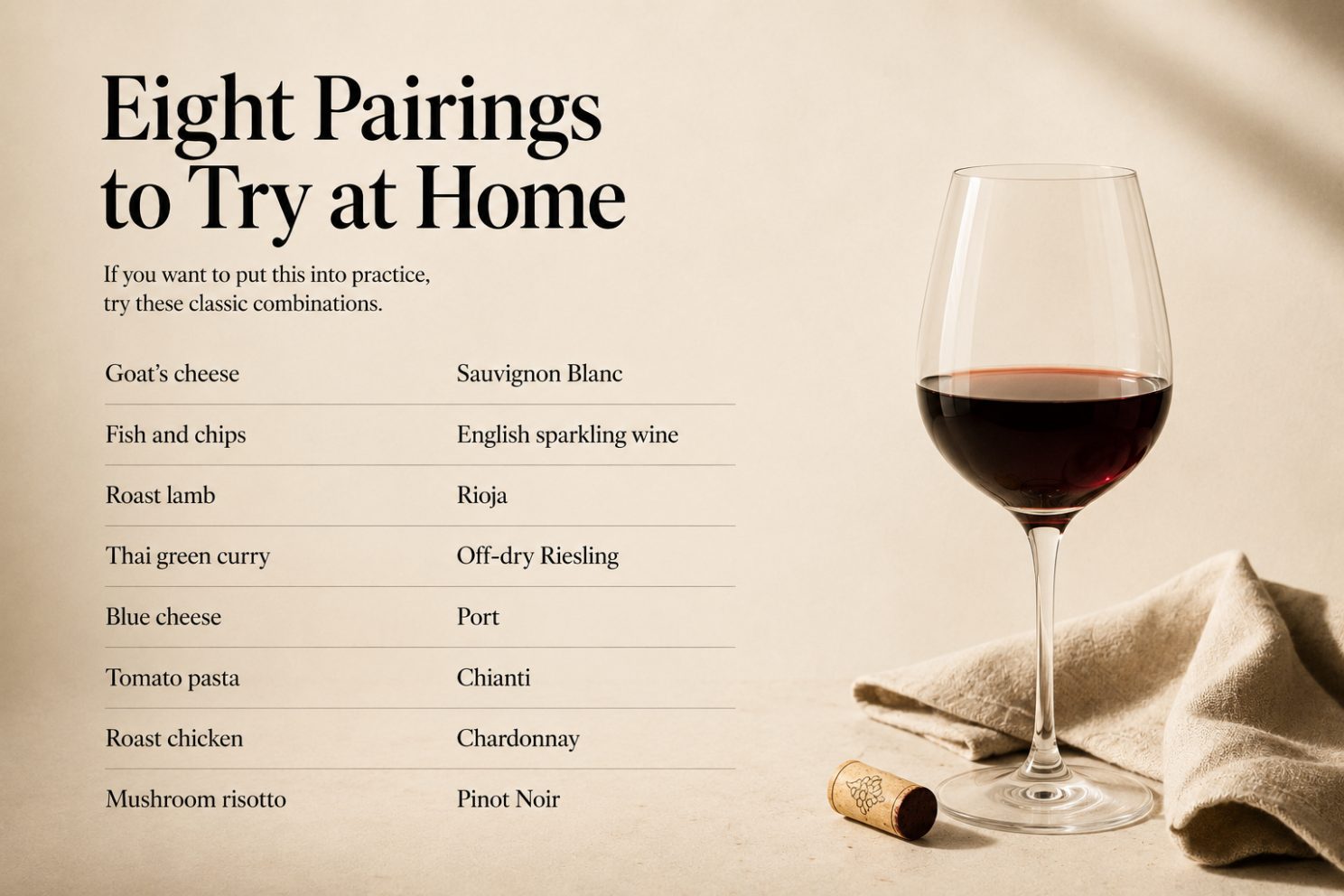
Once you strip away the jargon and the old-fashioned rules, most successful pairings come down to a handful of simple ideas. It’s far less about memorising that Sauvignon Blanc goes with goat’s cheese or that red wine must go with steak, and much more about understanding how flavours interact.
One thing I always emphasise is that food usually changes the way wine tastes more than wine changes the food. Every bite you take prepares your palate for the next sip. Depending on what’s on your plate, the same wine can suddenly taste softer, sharper, fruitier, or even more bitter.
Once you understand why that happens, everything starts to make sense, and choosing the right wine becomes much easier and a lot more enjoyable.
The Six Key Factors in Food & Wine Pairing
Nearly every successful pairing can be explained by one or more of these characteristics:
- Salt
- Acidity
- Fat
- Sweetness
- Umami
- Spice
Let’s take them one at a time.
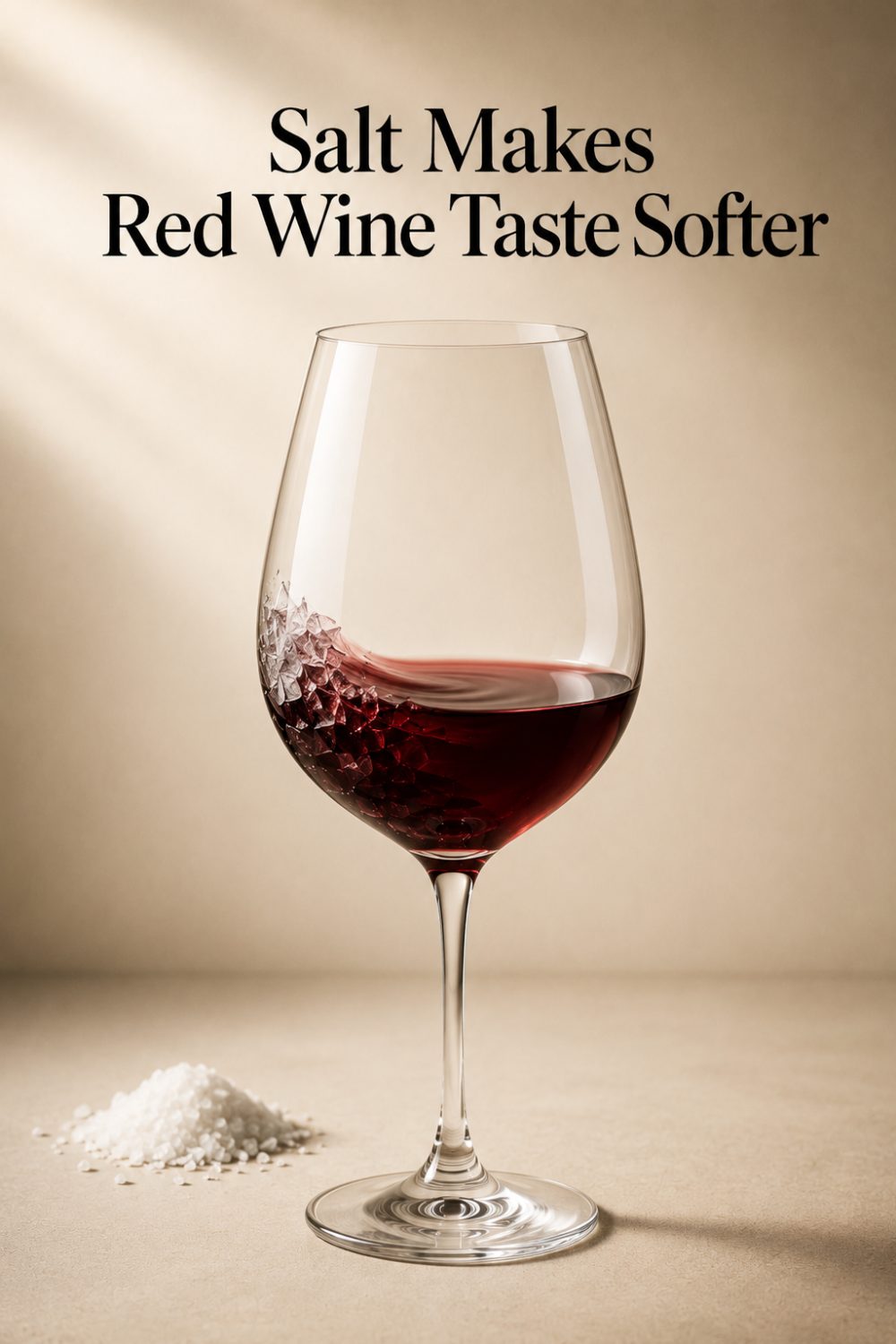
Foods high in salt tend to soften acidity, reduce bitterness, and make wines appear fruitier and fuller-bodied.
Salt
Salt is one of the easiest flavours to work with and one of the most forgiving.
Foods high in salt tend to soften acidity, reduce bitterness, and make wines appear fruitier and fuller-bodied. They can also soften tannins in red wines, which is why something like a firm Cabernet Sauvignon suddenly feels much more approachable alongside food.
In other words, salt often makes wine taste better.
Think about combinations like:
- Mature Cheddar with Cabernet Sauvignon
- Parma ham with Prosecco
- Charcuterie with Rioja
- Parmesan with Chianti
These pairings aren’t accidents. Salt is doing a lot of the work behind the scenes.
In my experience, if someone finds a wine a little sharp or too tannic on its own, the answer isn’t always to change the wine. It’s often just to take another bite of food.
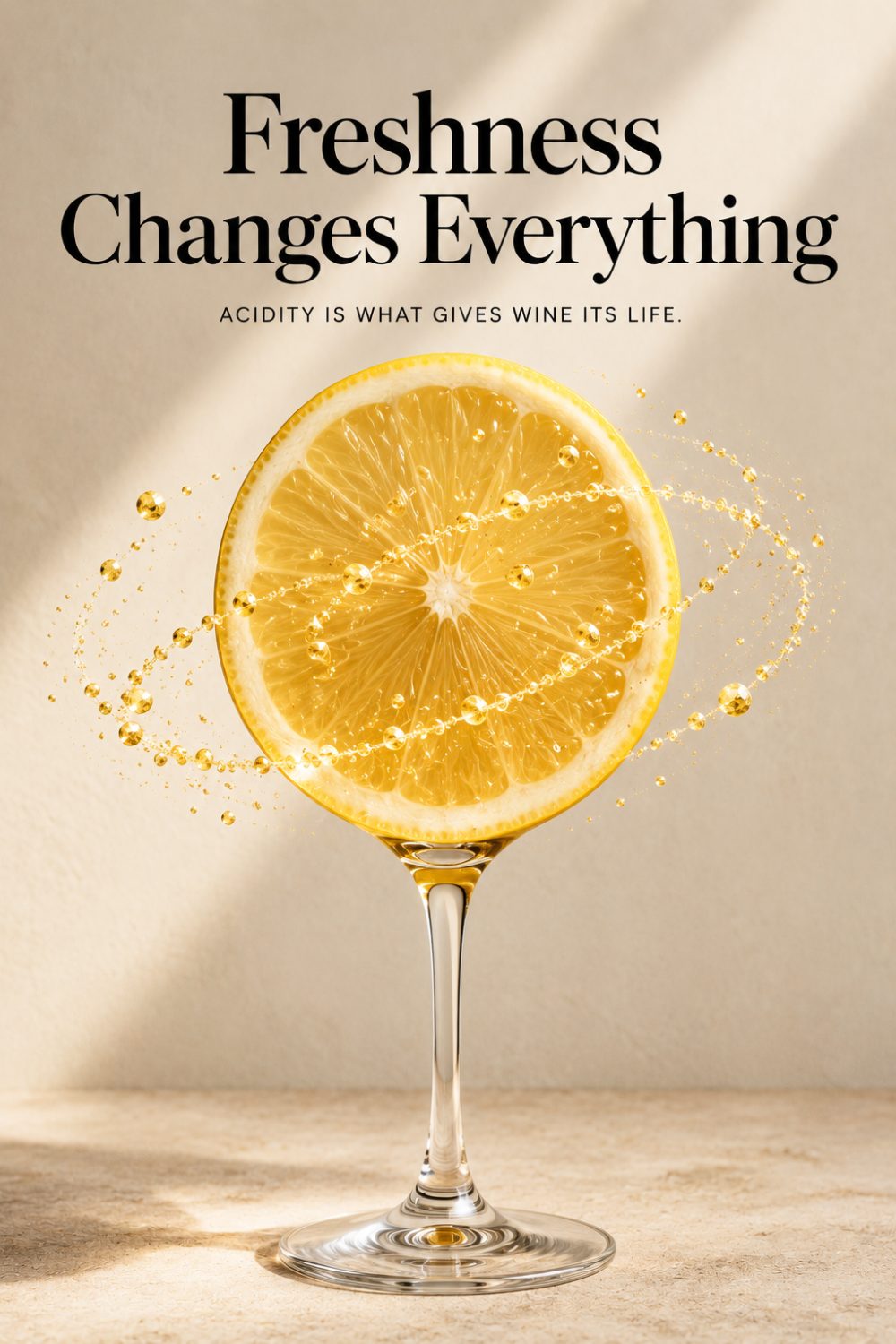
Acidity is what gives wine its freshness and energy.
Acidity
Acidity is what gives wine its freshness and energy. Without it, wine feels flat and lifeless.
Foods high in acidity, such as tomatoes, citrus, and vinaigrettes, reduce the perceived acidity in wine, making it seem softer and more rounded.
Wines that naturally have good acidity tend to work particularly well here. Sauvignon Blanc, Riesling, Albariño, English sparkling wine, and Champagne are all reliable choices.
Try this yourself
This is something we demonstrate on our WSET courses because the difference is immediate:
- Pour a glass of Sauvignon Blanc
- Taste it on its own
- Take a bite of goat’s cheese with a squeeze of lemon or a tomato salad
- Taste the wine again
Most people are surprised by how much softer and more balanced the wine suddenly feels
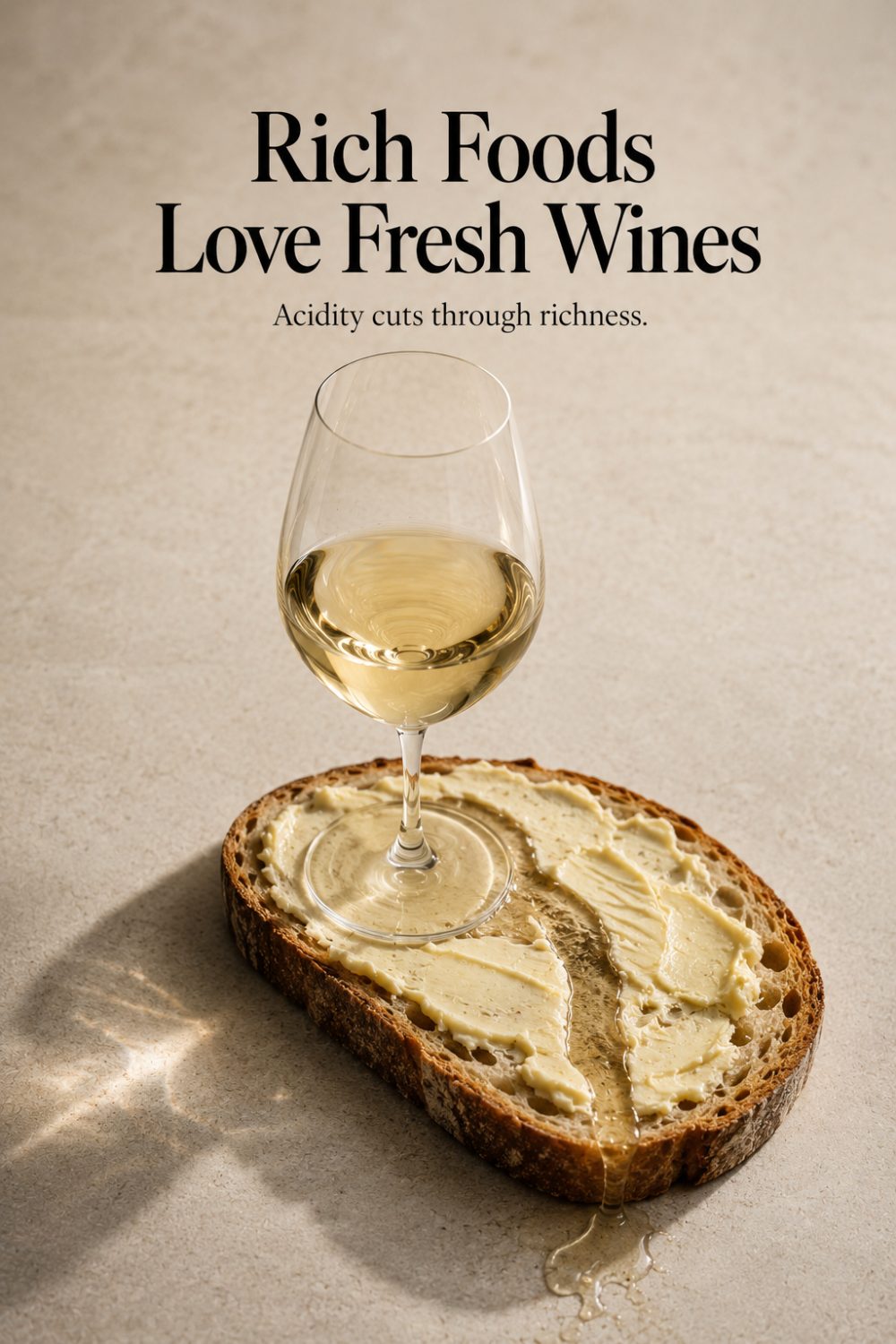
Wine, particularly wine with good acidity, refreshes your palate between bites.
Fat
Rich, fatty foods coat your palate and can feel quite heavy.
Wine, particularly wine with good acidity, refreshes your palate between bites. It doesn’t cut through the food as dramatically as people often say, but it restores balance and keeps everything feeling lively.
That’s why combinations like:
- Fish and chips with sparkling wine
- Roast pork with Chenin Blanc
- Smoked salmon with Champagne
- Creamy pasta with Chardonnay
work so well.
When explaining this to guests or friends, I tend to focus on the idea of balance rather than rules. Saying the freshness of the wine lifts the richness of the dish is far more useful than simply stating what goes with what.
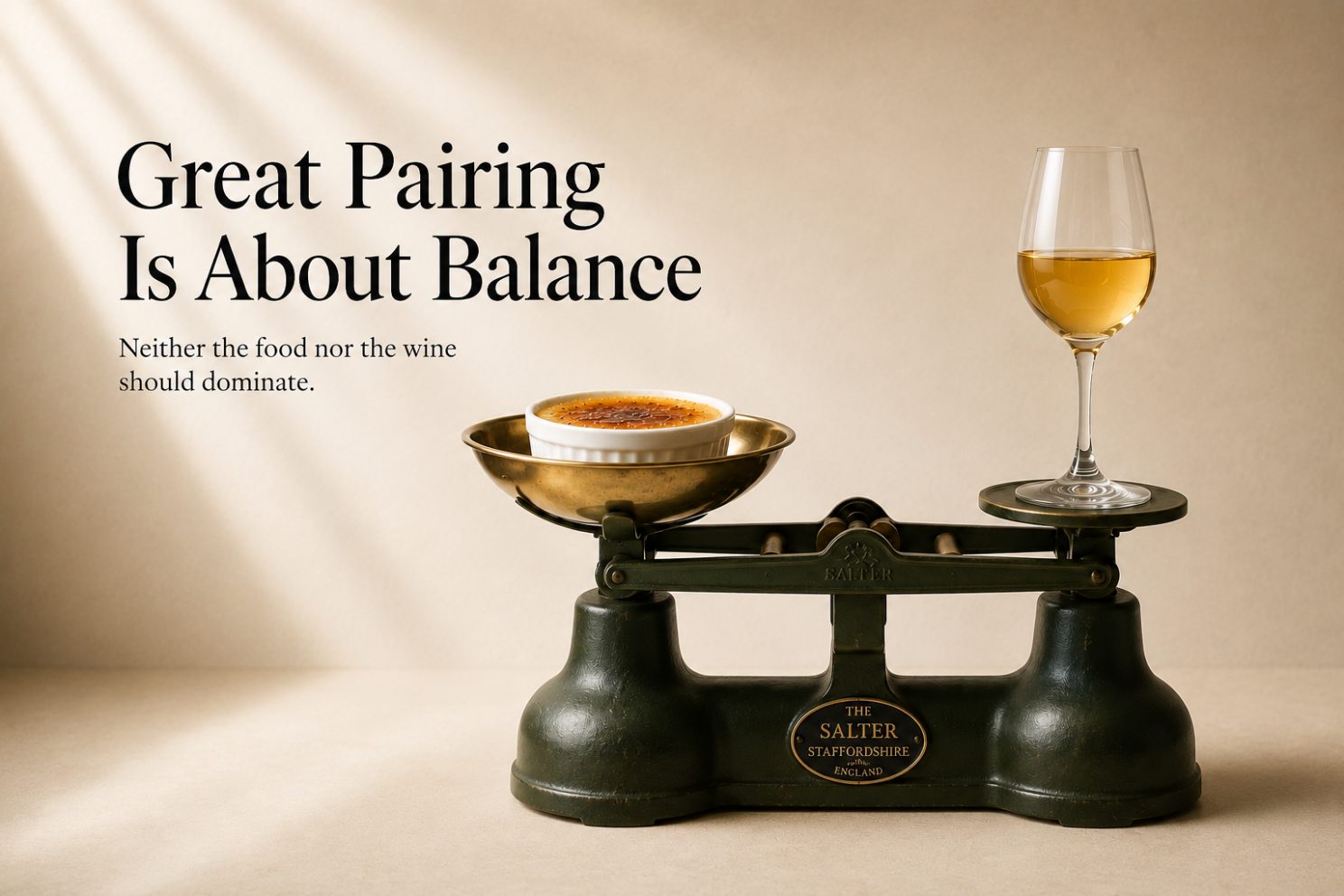
Sugar in food reduces fruitiness in wine and increases the perception of acidity and bitterness.
Sweetness
This is where people often come unstuck.
The common mistake? Pairing a dry wine with a sweet dessert and then wondering why the wine suddenly tastes sharp or bitter.
Sugar in food reduces fruitiness in wine and increases the perception of acidity and bitterness. That’s why a dry wine can feel quite harsh alongside something sweet.
A simple rule of thumb is that the wine should be at least as sweet as the dessert.
Classic examples include:
- Sauternes with crème brûlée
- Moscato d’Asti with fresh fruit
- Tokaji with peach tart
- Tawny Port with sticky toffee pudding
- Ruby Port with chocolate desserts
In my experience, dessert is also one of the easiest moments to introduce people to something new. By that stage of the meal, people are relaxed and often more open to trying something different.
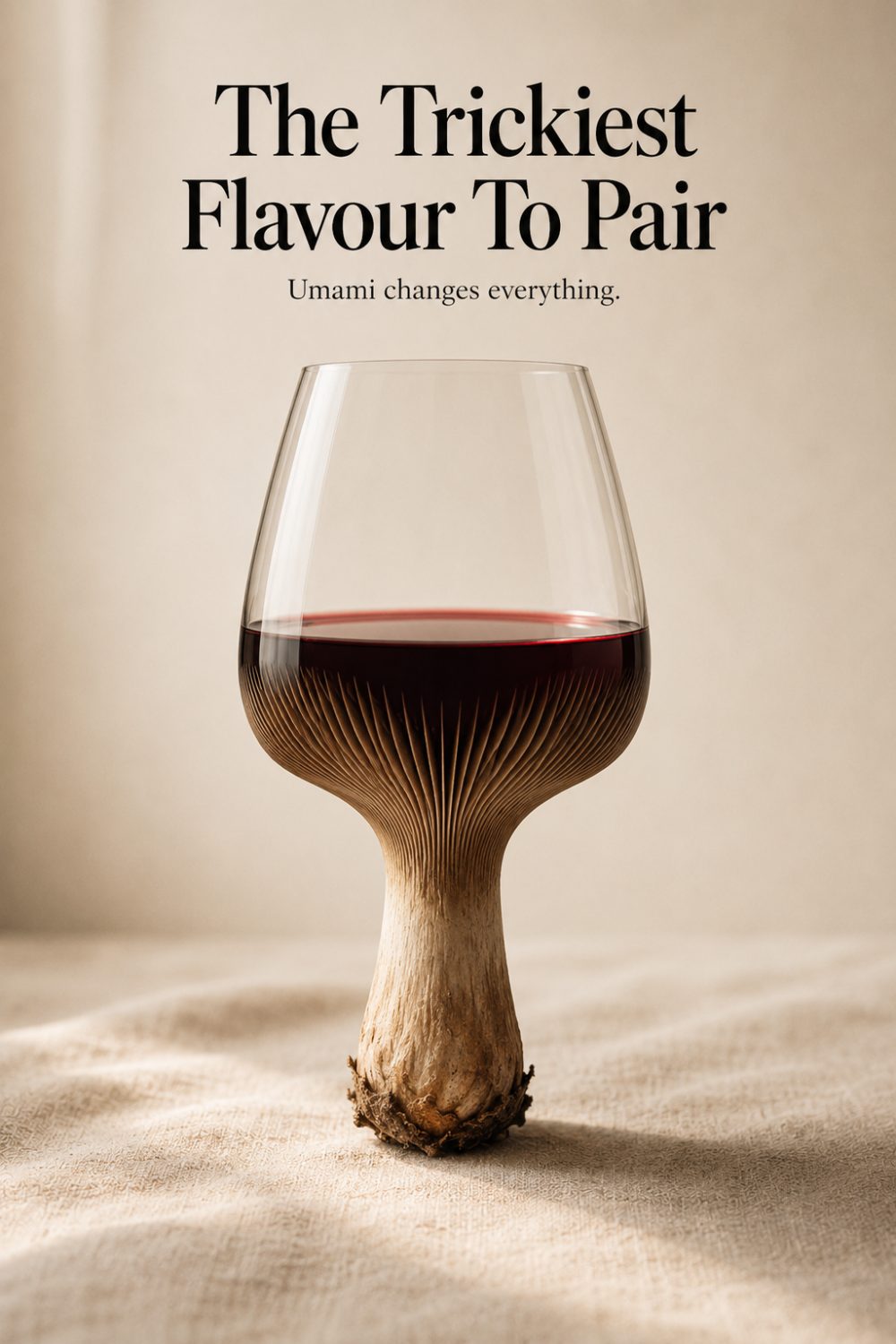
Umami can make wine seem more bitter, more acidic, and less fruity.
Umami & Bitterness
Umami is that savoury, mouth-filling quality you find in foods like mushrooms, Parmesan, soy sauce, slow-cooked meats, seaweed, and truffles.
It’s delicious, but it can be tricky with wine.
Umami can make wine seem more bitter, more acidic, and less fruity. Bitterness in food, think walnuts, rocket, or dark chocolate, can also exaggerate tannins in wine.
One thing that regularly surprises people is that big, bold reds aren’t always the best choice here. Wines with bright fruit and moderate tannins often create a much better balance with savoury dishes.
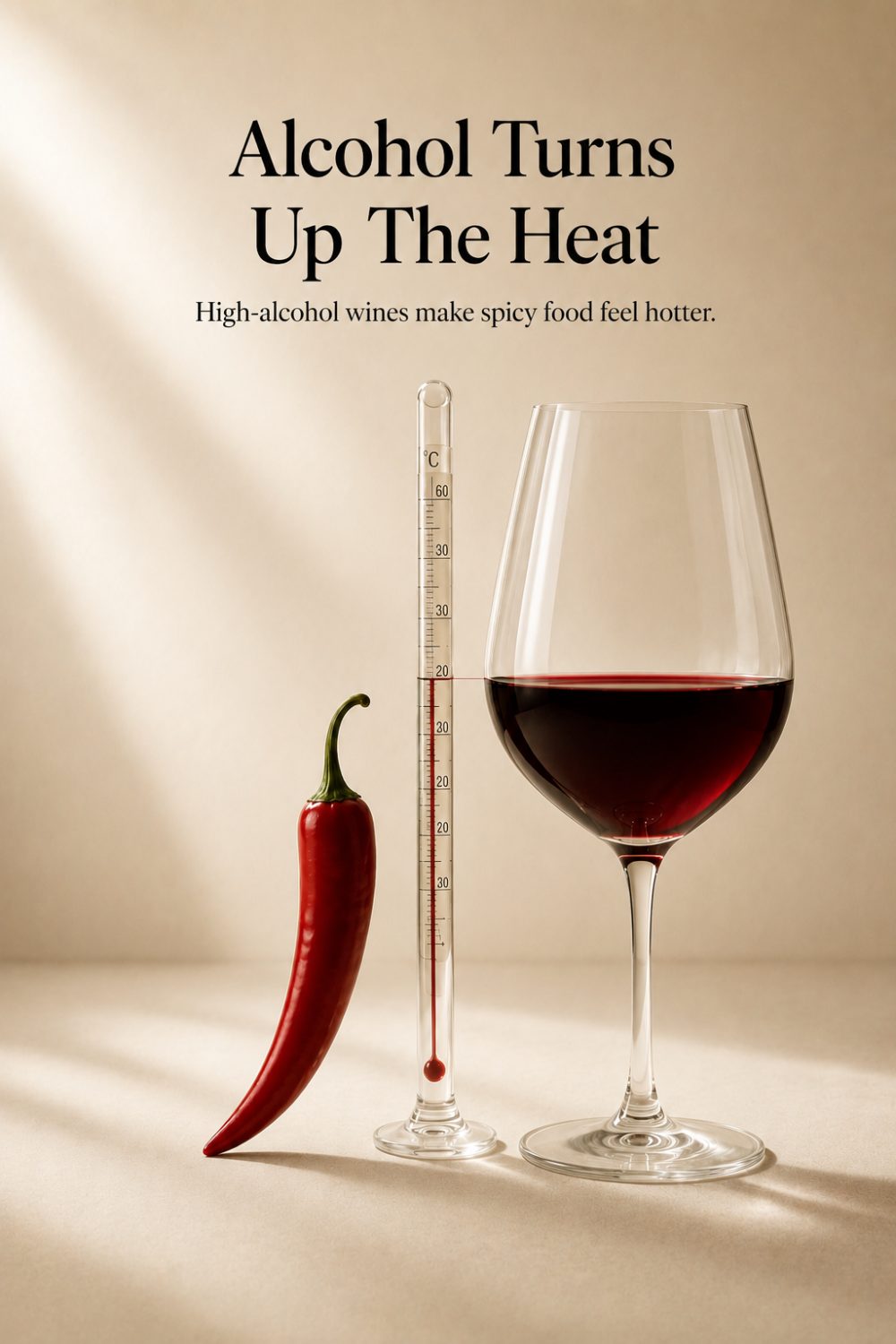
Spicy food contains capsaicin, the compound that creates heat.
Spice
Spicy food contains capsaicin, the compound that creates heat.
Alcohol amplifies that heat, which is why high-alcohol wines can make spicy dishes feel even hotter.
Wines with a touch of sweetness and lower alcohol tend to work better:
- Off-dry Riesling
- Gewürztraminer
- Chenin Blanc
- Moscato
That said, personal preference always plays a role. Some people genuinely enjoy the intensity of bold reds with spicy food. There’s no right or wrong here, just different tastes.
A Simple Way to Visualise It
If you were to map this out, it would look something like:
Food ↓ Salt / Acidity / Fat / Sweetness / Umami / Spice ↓ Changes how you perceive wine ↓ Better food and wine pairing
It’s a simple idea, but once you see it this way, a lot of pairings start to make sense.
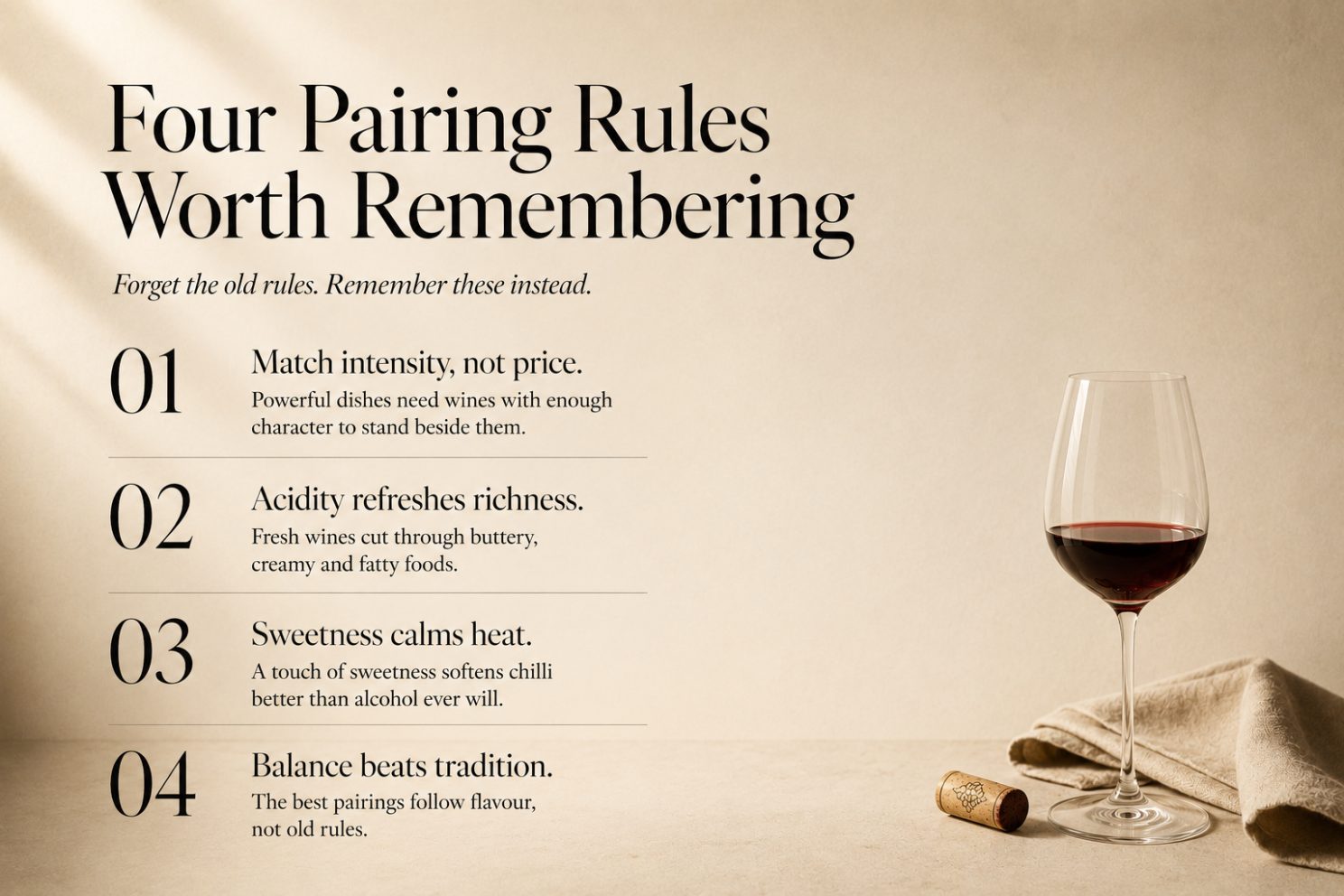
Wine isn’t mathematics.
Some people prefer Chardonnay with seafood, others swear by Sauvignon Blanc. Some love Pinot Noir with duck, others reach for Rioja.
No one is wrong.
The best pairing is always the one you enjoy.
Pairing Isn’t About Impressing People
Wine is meant to be enjoyed, not worried about.
If you love a pairing that breaks every rule in the book, that’s absolutely fine.
Your palate is the final judge, not anyone else’s.
What This Means in Practice
Understanding pairing isn’t just about knowledge, it’s about experience.
It leads to better conversations, more confident recommendations, and ultimately more enjoyable meals. People rarely remember the vintage, but they do remember how everything came together.
The Final Sip
Food and wine pairing often seems far more complicated than it really is.
In my experience, once people understand a few simple principles, something shifts. They stop second-guessing themselves and start trusting their palate.
That’s when it becomes enjoyable.
Some of the best pairings don’t come from books. They come from curiosity, from trying something slightly unexpected, and from paying attention to what actually works for you.
So open a bottle, cook something you enjoy, and see what happens. That’s where the real learning is.
About the Author
John Callow is the founder of Northern Wine School and a hospitality professional with decades of experience in wine education, hospitality management, and WSET training.
Through Northern Wine School, he helps individuals and hospitality teams build practical wine knowledge in an engaging, approachable, and real-world way.